
My Journey from Computer Repair at Age 12 to Software Engineering
From hardware repair in 2015 and top academic rank, to architecting a 2,000-user QR system, NodeSecure security audits, and production restaurant platforms.
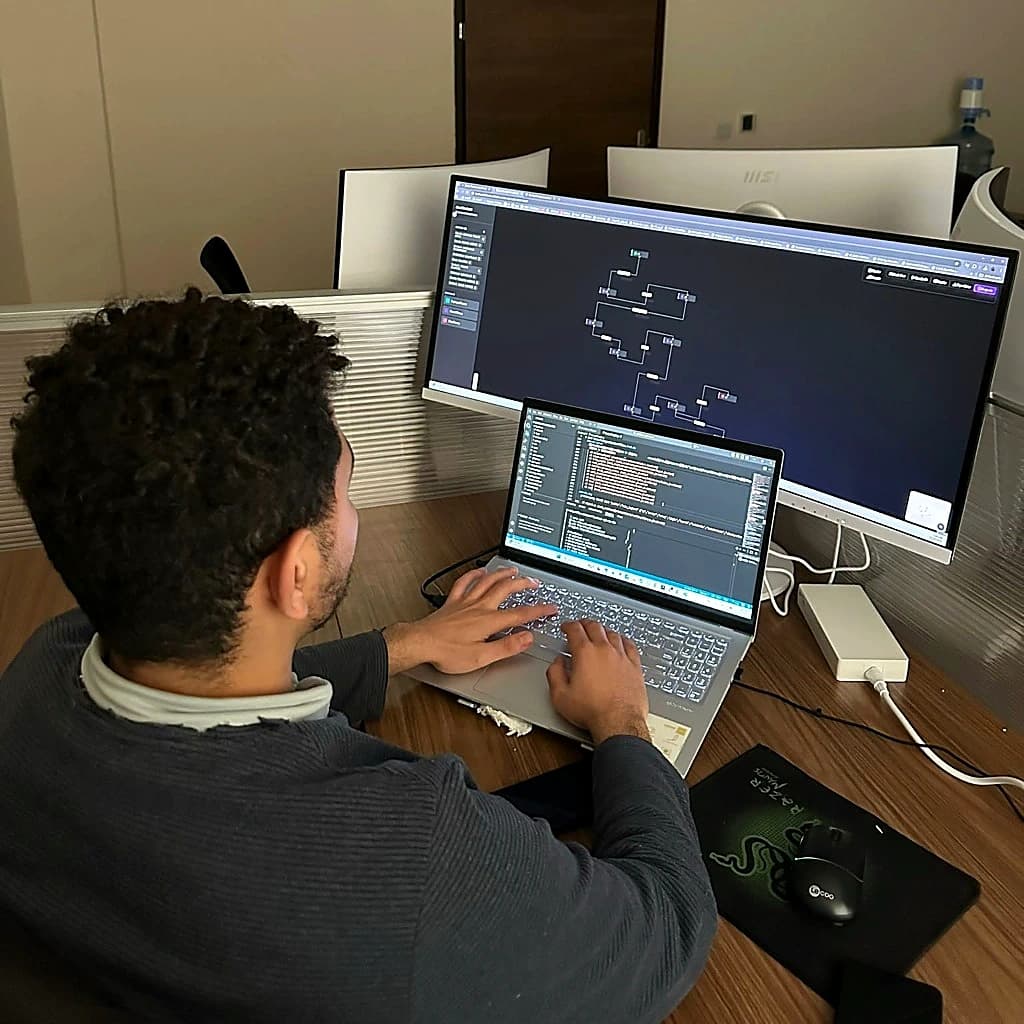
Hello everyone,
I'm Hamed Mohamed Abdelaalim Kamel, a Software Engineer graduated from Tokat Gaziosmanpaşa University in Turkey.
This post isn't a passive resume recap. It is an honest documentation of how my engineering philosophy was forged: how I think, how I navigate technical and business constraints, and why I believe an engineer's true caliber is measured not by lines of code, but by the tangible problems they solve and the business value they unlock.
2015: Starting at Age 12 — How Hardware Repair Builds Better Engineers
My journey into computing began in 2015 when I was just 12 years old. That year, I earned a Mini Maintenance (Hardware & Software) certification from Nile International Academy.
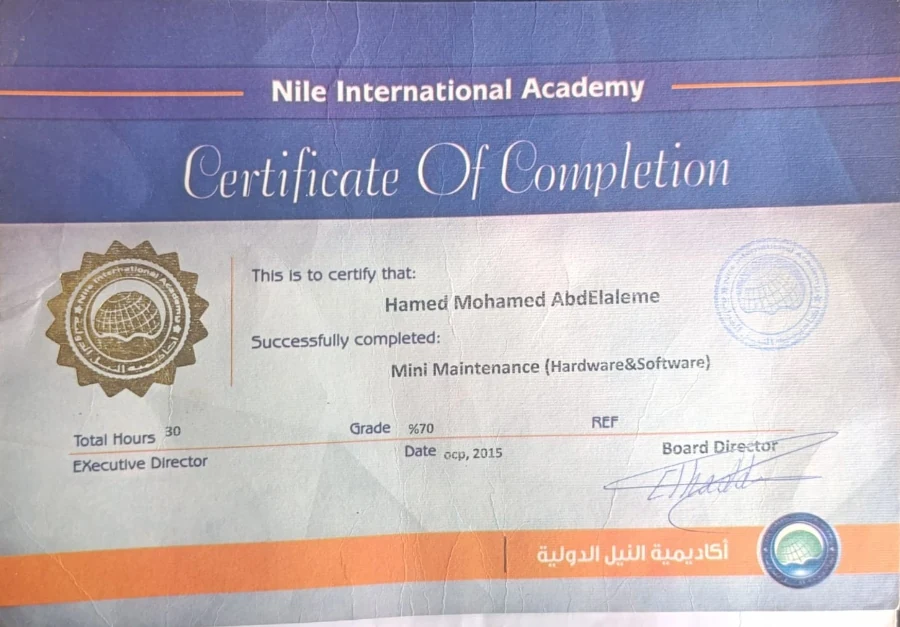
Nile International Academy — Mini Maintenance (Hardware & Software) Certificate at Age 12 (2015)
Working directly with physical hardware at such an early age provided me with an intuitive foundation that stays with me today:
- Understanding how the machine breathes physically: motherboards, bus bandwidth, CPU cycles, and how thermal and memory constraints govern software behavior.
- Realizing early on that every complex cloud server is simply a computer with finite resources that will choke if abused with poorly architected queries or runaway loops.
- Instilling a relentless troubleshooting mindset: using logical deduction, isolating failure domains, and diagnosing root causes rather than patching superficial symptoms.
2019: Discovering the Web, UX Identity & Why I Studied Digital Marketing with Google
Around 2019, my focus shifted toward software and web architecture.
I began with online courses and learned core principles from resources like Elzero Web School until I was comfortably building web applications from scratch.
However, when I started with Frontend development, I felt an immediate friction with visual balance, colors, and spatial harmony. Digging deeper, I realized there is a comprehensive science behind Visual Identity & User Experience (UI/UX):
- How color schemes project authority, trust, and usability.
- How precise whitespace, typography hierarchy, and micro-interactions eliminate cognitive friction for users.
The Business Reality: Code Exists to Drive ROI
While building my first web applications, I realized a fundamental truth that many engineers overlook: an elegantly coded website is completely useless if nobody can discover it, or if it fails to convert visitors into customers. Software engineering cannot exist in an academic bubble decoupled from commercial reality.
To bridge this gap, I completed and earned the Google Fundamentals of Digital Marketing certification, internationally accredited by The Open University and IAB Europe:
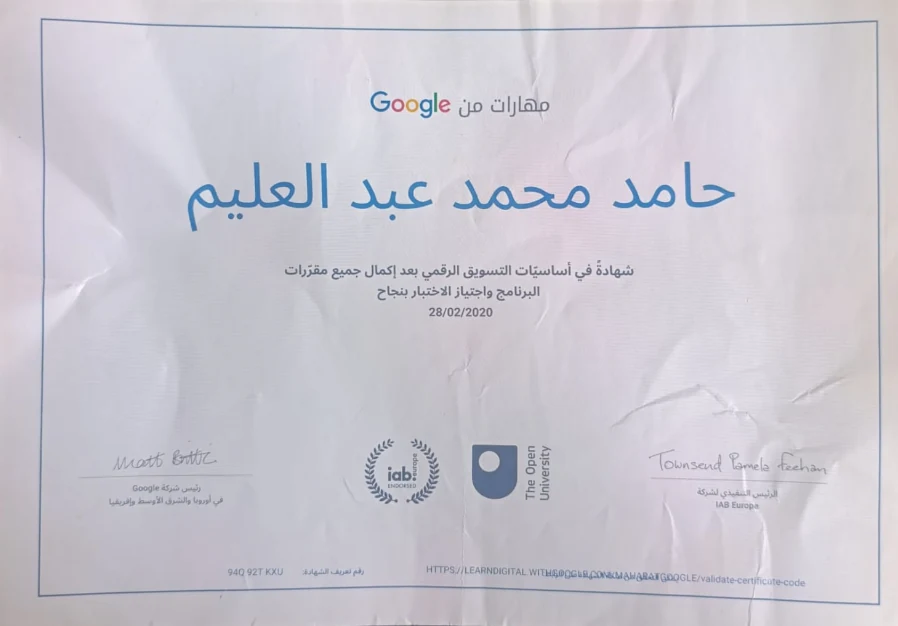
Google — Fundamentals of Digital Marketing Certificate (Endorsed by The Open University & IAB Europe)
I wanted to deeply understand:
- How search engines (SEO) crawl, index, and rank modern web applications.
- User psychology, interaction patterns, and digital conversion funnels.
- How performant code, low latency, and Schema.org structured data directly drive customer acquisition and business revenue.
This early exposure is the reason why Technical SEO, Core Web Vitals, and conversion architecture are first-class citizens in every system I build today.
Language Immersion & Academic Foundations: The Power of Mathematics
Before beginning my Computer Engineering degree in Turkey, I dedicated an entire preparatory year to mastering the Turkish language while continuously sharpening my algorithmic foundations.
When I entered Tokat Gaziosmanpaşa University, I focused heavily on core theoretical and mathematical foundations. Frameworks come and go, but mathematical models and algorithmic rigor are what differentiate true software engineers from framework operators:
- Mathematics: Achieved an A (High Distinction) in Calculus I, an A in Calculus II, an A in Discrete Mathematics, and a strong grade in Differential Equations.
- Algorithms & Data Structures: Achieved a perfect score (100% / Tam Not) in Algorithms & Data Structures.
This mathematical foundation became the backbone of my engineering work: analyzing Big-O algorithmic complexity, profiling memory footprints, structuring database connection pools, and traversing abstract syntax trees (AST).
- The Result: Graduated ranked 1st among all international students at the university.
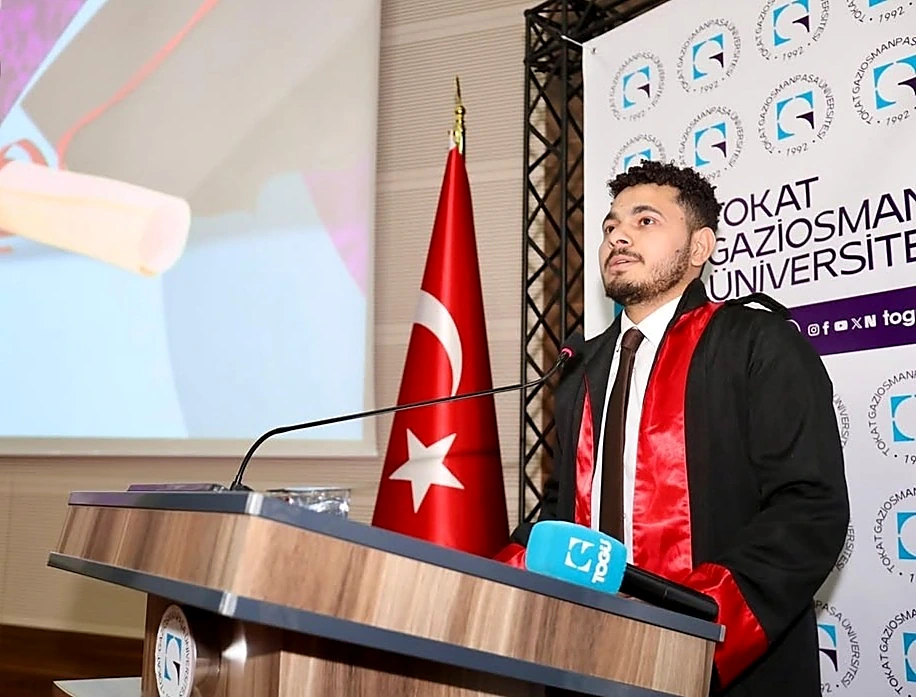
Delivering my speech while being honored as 1st ranked among all international students — Tokat Gaziosmanpaşa University
Real-World Engineering: Leading a Team on a Live 2,000+ User Production System
Academic excellence only matters when stress-tested against real users. I joined the university's software development center and was appointed a core member of the Artificial Intelligence and Digital Transformation Organization (YZDD).
I served as a Team Lead for a development team of 3 engineers, operating as a Full-Stack Developer with a relentless focus on code quality and application security:
- SAST (Static Application Security Testing): White-box static analysis of the source code to intercept logic vulnerabilities, variable leaks, and insecure dependencies prior to the build pipeline.
- DAST (Dynamic Application Security Testing): Black-box runtime penetration testing without code access, simulating realistic attack payloads, intercepting HTTP requests, and probing API endpoints under adversarial conditions.
The QR Attendance System: Solving Real-World Fraud at Scale
The challenge was never just building an API to log timestamps. The real engineering problem was: How do you cryptographically prove that a student is physically inside a specific lecture hall and prevent attendance fraud across campus?
We architected a 3-pillar engineering solution:
- Strict Geofencing Verification: Satellite and browser location coordinates verify that the student is strictly within 50 to 200 meters of the classroom perimeter.
- Dynamic 15-Second Ephemeral QR Tokens: The QR code displayed on the lecture screen generates short-lived, digitally signed cryptographic tokens that cycle every 15 seconds, rendering screenshot sharing via messaging apps entirely useless.
- 7-Layer Defense Architecture: Hardened against token forgery and replay attacks, backed by Redis in-memory caching and Circuit Breakers to absorb the peak concurrency spikes when hundreds of students scan simultaneously within a 2-minute lecture start window.
Today, the system is in active daily production across Tokat Gaziosmanpaşa University:
- Running across 6 faculties, 13 academic departments, and 42 courses.
- Actively serving over 2,000 daily users.
- Developed over 15 months, spanning the entire Software Development Life Cycle (SDLC): architectural design, development, security auditing, CI/CD deployment, and production maintenance.
🔗 Read the complete QR Attendance System Case Study & Benchmarks
🌐 Live Admin Portal | Live Student UI
Open-Source Cybersecurity Contributions: NodeSecure
I extended my security focus into the global open-source community by contributing to NodeSecure, an established security ecosystem used worldwide to audit npm packages and JavaScript runtimes for vulnerabilities and supply-chain attacks.
I had 9 Pull Requests officially reviewed, accepted, and merged upstream:
- Focused extensively on Abstract Syntax Tree (AST) analysis in packages like
js-x-rayandscanner. - An AST translates source code into a structured data tree that security engines can inspect, enabling automated detection of Server-Side Request Forgery (SSRF), insecure pseudo-random generators in cryptographic contexts, and obfuscated payloads before packages are deployed to production.
🔗 Read the NodeSecure Open Source Case Study & Pull Request Breakdown
Post-Graduation: High Agency & Building Production Platforms
I graduated in June 2026. Due to immediate financial realities, I didn't wait passively for a perfect software engineering offer; I took a job working in a restaurant in Istanbul to meet my obligations.
To an outsider, this might have looked like leaving software engineering behind. But an engineer's problem-solving mindset never switches off.
I noticed that the restaurant was using an outdated WordPress site with an inaccessible digital menu, riddled with critical vulnerabilities and missed business opportunities:
- Severe Security Flaws: Insecure SSL configurations, exposed SSH endpoints, and unpatched plugins.
- Heavy Asset Bloat: Painfully slow load times that alienated international tourists looking for quick menus in Istanbul.
- Non-existent SEO: Zero structured data in Taksim/Cihangir, one of the densest tourist districts in Istanbul, forfeiting thousands of potential walk-ins to competitors.
I approached the restaurant owner with commercial metrics and technical diagnosis. Naturally, abstract tech debt is hard to visualize, so he challenged me:
"Build a prototype and let's see what you can do."
Instead of endless debate, I built a blistering-fast, interactive prototype. The moment he experienced the speed, UI, and live currency conversions, hesitation turned into complete confidence.
I engineered and deployed the full production platform from scratch:
- Built on Next.js 16 (App Router), React 19, and Supabase.
- Implemented 10 dynamic languages and a live currency converter supporting 6 currencies with real-time exchange rate APIs.
- Built localized direct WhatsApp ordering and automated message templating.
- Executed a flawless WordPress migration with 25+ permanent 301 redirects and comprehensive Schema.org Local SEO.
🔗 Read the Kardeşler Restaurant Platform Case Study
🌐 Visit kardeslercihangir.com (Live in Production)
Current Projects: October 2026
Delivering measurable results naturally attracts subsequent work. In October 2026, I started work on my second bespoke hospitality platform: an Asian and Sushi restaurant platform (Lucky Sushi & Chinese) in Istanbul, continuing to refine high-performance digital infrastructure that drives revenue for businesses.
What This Means for Your Company or Project
Today, I operate as a Full-Stack Software Engineer specialized in system architecture, application security, high-concurrency performance, and commercial digital products.
When you hire or collaborate with me, you are not getting someone who merely writes syntax to check a ticket. You gain an engineering partner who:
- Demonstrates Extreme Ownership (High Agency): Identifies friction in your architecture or business pipeline and eliminates it without requiring continuous hand-holding.
- Builds Security-First Systems: Thinks like an attacker to proactively safeguard your business, infrastructure, and user data.
- Respects Business ROI: Understands that architecture, page speed, and Schema.org directly translate into customer acquisition, retention, and bottom-line revenue.
This is who I am and the methodology I bring to every system I build. And the journey is just getting started.