
I Thought Refactoring Was About Clean Code. I Was Wrong.
A practical look at refactoring an Express.js backend for a university attendance system, focusing on risk mitigation, API behavior, and DB connection pooling.
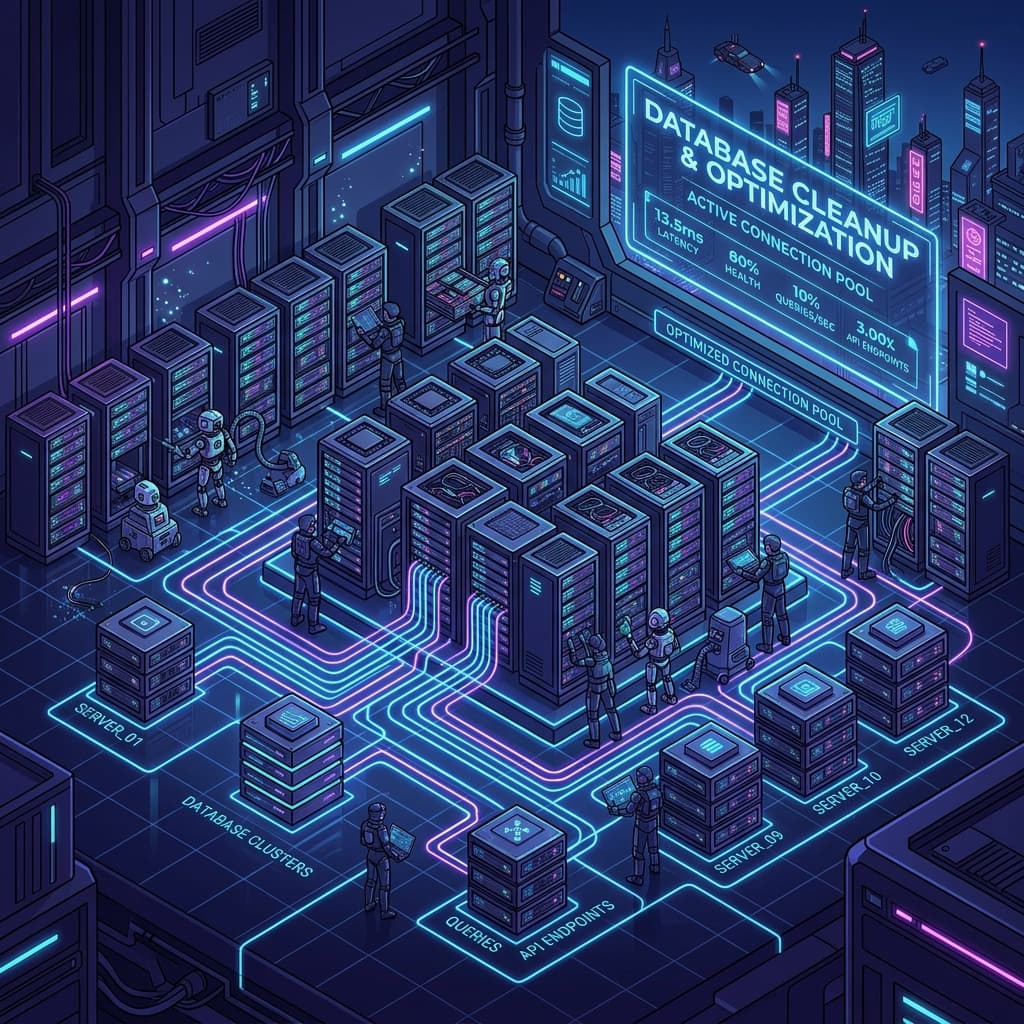
I thought refactoring a backend would mostly be about rewriting bad code into "clean" code.
I was wrong.
The hardest part was making sure nobody noticed the refactor was happening at all.
I recently worked on restructuring an Express backend for a university QR attendance system. The platform currently has 2,000 active users with an average of ~300 daily check-ins, and is still undergoing testing phases across different faculties.
Even at this scale, the stakes were high: if the API returned an unexpected data shape or went down during a lecture, student attendance records would be compromised.
The Chaos I Inherited
When I started digging through the codebase, I found an architecture that had organically grown over time. It was a classic case of technical debt:
- Massive Route Files: We had route files exceeding 3,000+ lines.
- Duplicated Auth: The JWT validation middleware was duplicated manually across multiple files.
- The Database ORM Soup: The codebase was simultaneously using
pg(raw queries),knex(query builder), andprisma(ORM) all mixed together. - Logic Leaks: Complex business logic was tightly coupled directly inside the Express routes.
But one architectural choice stood out the most.
The Prisma Connection Pool Issue
While reviewing the route files, I noticed this pattern repeated everywhere:
// Inside studentRoutes.js
const { PrismaClient } = require('@prisma/client');
const prisma = new PrismaClient(); // ❌ Creating a new instance per file

router.post('/record', async (req, res) => {
    // ...
});

// Inside attendanceRoutes.js
const { PrismaClient } = require('@prisma/client');
const prisma = new PrismaClient(); // ❌ Another independent connection pool
Every route file was creating its own new PrismaClient(). This meant the application was inadvertently opening multiple independent connection pools to the database. During simultaneous check-ins at the start of a lecture, this approach wastes connections and risks hitting database limits prematurely.
The fix was straightforward: extracting a single Prisma instance (Singleton pattern) and reusing it across the app.
// prisma/client.js
const { PrismaClient } = require('@prisma/client');
const prisma = new PrismaClient();
module.exports = prisma; // ✅ One global pool
This tiny code change made database connection usage more predictable and reduced the risk of hitting connection limits during peak usage.
Practical Tip: Never instantiate your ORM client inside individual route or service files. Always use a global singleton to maintain a single connection pool across the entire Node.js process.
"Clean Architecture" is the Easy Part
Another major realization I had during this refactor: implementing "clean architecture" is actually the easy part. The real challenge is doing it while:
- Preserving backward compatibility: The frontend expects exact JSON keys.
- Not breaking the mobile app: Mobile apps can't be instantly forced to update.
- Keeping response shapes identical: Even if the underlying database structure changes, the API output must remain pristine.
- Introducing tests into fragile flows: Figuring out how to test flows that were never built to be testable.
- Designing rollback paths: Having a clear plan to revert if the deployment introduces unexpected regressions.
Refactoring by Risk Level
To manage this, I started categorizing features by a "refactor risk level".
For example, I treated the attendance and session flows as high-risk areas and avoided changing them before adding integration tests first. Because those flows affect real student records, any bug introduced there isn't just a log error—it translates to incorrect academic data.
One of the more interesting migrations was replacing raw SQL transactional flows.
Migrating to Prisma Transactions
We had legacy raw SQL transactions that looked something like this:
// Legacy Knex/PG mixed transaction
const client = await pool.connect();
try {
  await client.query('BEGIN');
  // Complex inserts and updates
  await client.query('COMMIT');
} catch (e) {
  await client.query('ROLLBACK');
  throw e;
} finally {
  client.release();
}
I migrated these to prisma.$transaction. The goal wasn't just to use a modern tool, but to guarantee type safety and automatic rollbacks, while ensuring the API behavior remained compatible with existing clients.
// New Prisma Transaction
const result = await prisma.$transaction(async (tx) => {
  const session = await tx.session.update({ /* ... */ });
  const attendance = await tx.attendance.create({ /* ... */ });
  return attendance;
});
The Realization
The deeper I got into this project, the more my perspective shifted.
Backend engineering stopped feeling like "just building APIs"...
...and started feeling more like: Risk management under production constraints.
Need help with your backend?
I build and optimize full-stack apps with Node.js, React, and PostgreSQL. If you have a slow API or need a robust architecture, let's talk.